How assessments transform hiring for better candidate selection

TL;DR:
- Advanced assessments such as AI-driven tests and structured interviews improve prediction and fairness in hiring.
- Legal frameworks vary across countries, requiring compliance with GDPR, bias reduction, and transparency.
- Using a combination of validated tools and human judgment leads to better, fairer hiring outcomes.
Even the best CV doesn’t predict workplace success. That’s a frustration shared by HR professionals across the Netherlands, UK, and Spain who are tired of making costly hiring mistakes based on polished paperwork and gut instinct. The good news? Advanced assessments are changing everything. From AI-driven cognitive tests to cultural matching tools, forward-thinking teams are replacing guesswork with genuine evidence. This guide walks you through the science, the country-specific landscape, the legal essentials, and the practical steps to build a smarter, fairer hiring process that actually works.
Table of Contents
- Why assessments matter: The science and impact
- Assessment methods across the Netherlands, UK and Spain
- Emerging trends: AI, psychometrics and the future of assessments
- Legal and ethical essentials for assessment use
- Putting it into practice: Practical tips for better hiring
- The overlooked truth: It’s about people, not just predictive scores
- Enhance your hiring with advanced assessments
- Frequently asked questions
Key Takeaways
| Point | Details |
|---|---|
| Assessments outperform CVs | A structured, multi-method assessment approach predicts better hiring outcomes than CVs or interviews alone. |
| Compliance is complex | GDPR, the EU AI Act, and national laws require assessment processes to be validated, transparent, and fair. |
| AI drives results | AI-powered tools reduce time-to-hire, lower turnover, and can boost performance when ethically applied. |
| Human oversight matters | Even advanced tools need the context and judgement only HR professionals can provide to avoid bias. |
Why assessments matter: The science and impact
Traditional hiring has a reliability problem. CVs tell you what someone has done, not how they think, collaborate, or adapt. Unstructured interviews are even trickier. Research consistently shows they are heavily influenced by unconscious bias, first impressions, and interviewer mood. The result? Organisations spend time and money hiring people who look great on paper but struggle in the role.
The shift towards structured assessments has been growing steadily across Europe. Psychometric tools, skills-based challenges, and personality questionnaires are now mainstream in progressive HR teams. They offer something traditional methods simply cannot: a consistent, job-linked measure of candidate potential.
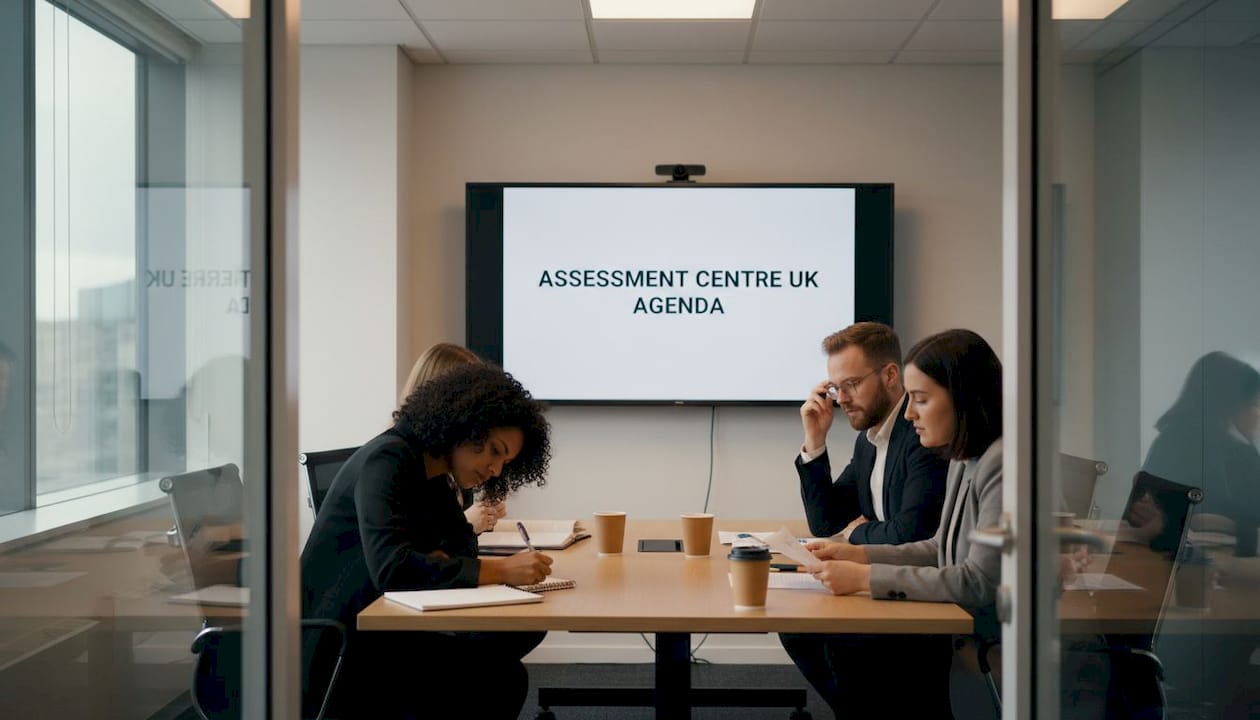
Assessment centres improve candidate selection, but personality tests must complement interviews rather than replace them, to avoid introducing new forms of bias.
The benefits are well documented and genuinely exciting. Here is why structured assessments are worth the investment:
- Predictive validity: Skills and cognitive tests predict job performance far better than CV reviews alone.
- Reduced bias: Structured formats limit the influence of irrelevant factors like appearance or accent.
- Job-linked criteria: Assessments tied to role requirements produce more relevant hiring decisions.
- Lower turnover: Candidates who are well matched to a role from the start tend to stay longer.
- Better candidate experience: Transparent, fair processes build trust and employer brand.
For HR professionals exploring AI in recruitment, the case for moving beyond intuition has never been stronger.
Assessment methods across the Netherlands, UK and Spain
Having covered the ‘why’, it is useful to see the country-specific ‘how’. Each market has its own legal framework, cultural expectations, and preferred assessment styles.
| Country | Common assessment types | Key legal or ethical requirements |
|---|---|---|
| Netherlands | Psychometrics, cognitive tests, structured interviews | GDPR compliance, job-relevant criteria, explicit consent required |
| United Kingdom | Multi-method: skills tests, assessment centres, structured interviews | Equality Act, bias reduction, structured evaluation encouraged |
| Spain | AI psychometrics, online delivery, competency frameworks | Point-factor job evaluation for firms over 50, AI equality mandates |
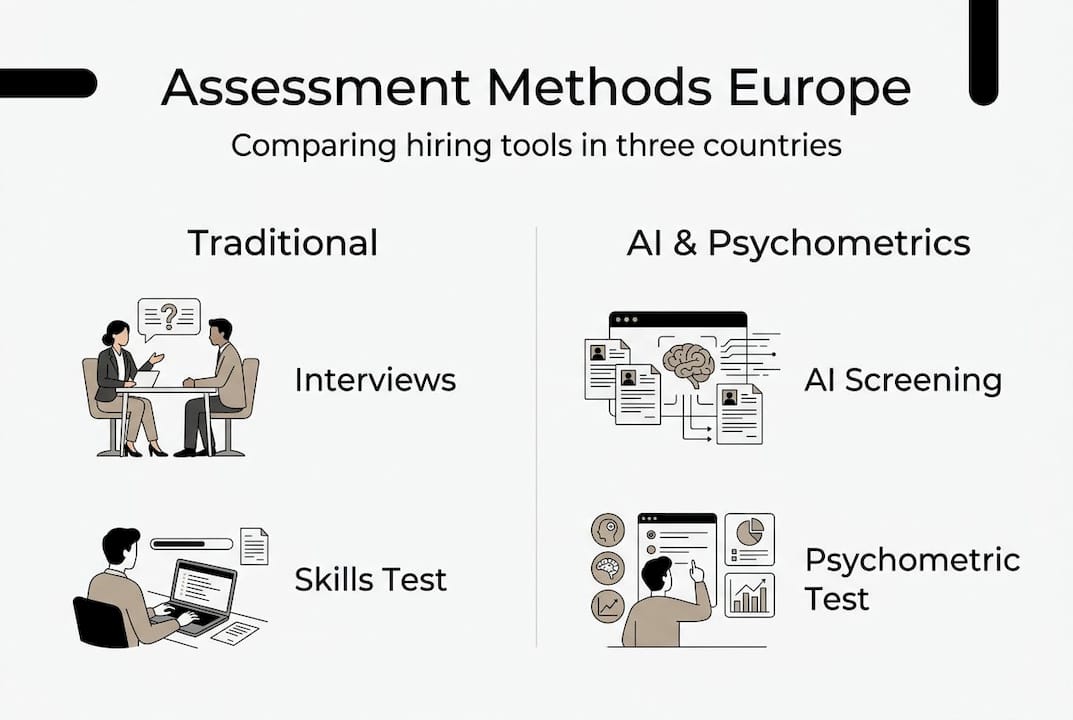
Assessment practices in NL, UK and ES highlight some clear differences. In the Netherlands, GDPR compliance is central. Every assessment must focus on job-relevant criteria, and candidates must give explicit consent before any data is collected. The Dutch approach is methodical and privacy-first.
Spain is moving quickly. The Spanish HR assessment market is embracing AI-driven psychometrics and online delivery at pace, while also mandating point-factor job evaluation systems for organisations with more than 50 employees. Equality and pay transparency are high on the agenda.
The UK takes a balanced, multi-method approach. Assessment centres, structured interviews, and skills tests are all widely used, with a strong emphasis on fairness and reducing bias throughout the process.
For teams managing AI and cultural fit across borders, understanding these differences is essential. What works brilliantly in Amsterdam may need adapting for Madrid or Manchester.
Emerging trends: AI, psychometrics and the future of assessments
With the main approaches mapped, the next step is spotting what is new and genuinely effective. The pace of change in assessment technology is remarkable, and we are over the moon about where things are heading.
AI-driven tools are now mainstream. Personality assessments, cognitive ability tests, and situational judgement exercises are being delivered digitally at scale, with results that are faster and often more consistent than traditional formats. AI and psychometrics are delivering up to a 50% reduction in turnover and performance gains of 30 to 55% for organisations that adopt them well.
Spain’s trajectory is particularly striking. The Spanish HR assessment market is forecast to nearly double from USD 453 million in 2024 to USD 931 million by 2032, driven largely by AI adoption.
| Assessment type | Impact on turnover | Performance improvement | Time-to-hire change |
|---|---|---|---|
| AI cognitive tests | Up to 50% reduction | 30 to 55% gains | Significantly faster |
| Structured interviews | Moderate reduction | Consistent improvement | Neutral |
| Skills-based challenges | High reduction | Strong gains | Faster |
Here is how to launch new assessment tools effectively:
- Define role-specific criteria before selecting any tool.
- Pilot with a small cohort to test for technical issues and candidate experience.
- Review results for adverse impact across demographic groups.
- Train hiring managers on interpreting and applying assessment data.
- Iterate based on outcomes, tracking quality of hire over time.
Pro Tip: Always validate any AI or psychometric tool for local cultural context and legal compliance before rolling it out at scale. A tool validated in the US may not translate well to the Netherlands or Spain without adaptation.
Explore the benefits of AI assessment and see AI interviews in action to understand what modern tools can genuinely deliver. The EU job evaluation toolkit is also worth reviewing for gender-neutral frameworks.
Legal and ethical essentials for assessment use
Embracing innovation brings fresh compliance and ethical questions. Getting this right is not just about avoiding fines. It is about building a hiring process that candidates trust.
The EU AI Act classifies recruitment AI as high-risk technology, meaning human oversight is mandatory, bias audits are required, and emotion recognition tools are outright prohibited. GDPR adds another layer, restricting how long candidate data can be stored and requiring clear justification for every data point collected.
Recruitment AI is high-risk under the EU AI Act. Human oversight, bias auditing, and transparency are not optional. Emotion recognition in hiring contexts is prohibited.
Here are the key pitfalls to avoid:
- Emotion AI: Prohibited under the EU AI Act for recruitment purposes.
- Special category data: Strict limits apply to health, religion, and ethnicity data.
- Cultural bias: Tools not validated locally can disadvantage certain groups unfairly.
- Lack of transparency: Candidates have the right to understand how decisions are made.
- No human review: Automated decisions without human oversight are legally problematic.
One finding worth noting: ethnic bias in hiring is measurably higher in the Netherlands than in Spain, which makes cultural fit assessments a particularly sensitive area in the Dutch market. What reads as a fair culture screen can easily tip into indirect discrimination without careful design.
Our talent screening guide and overview of AI interviews in HR cover these compliance points in more depth.
Putting it into practice: Practical tips for better hiring
With legal guardrails clear, focus shifts to practical implementation. Building a strong assessment strategy does not have to be complicated. It does need to be intentional.
Assessments work best when they are transparent, locally validated, and embedded within a structured hiring process rather than bolted on as an afterthought.
Here are five steps to build or refresh your assessment approach:
- Audit your current process. Identify where bias or inconsistency is most likely entering your decisions today.
- Map assessments to competencies. Every tool you use should connect directly to a measurable job requirement.
- Choose validated, local tools. Select assessments that have been tested for reliability and fairness in your specific market.
- Combine methods. No single assessment tells the full story. Blend cognitive, personality, and skills-based tools for a rounded view.
- Review and improve. Track quality of hire, time-to-fill, and diversity metrics to continuously refine your approach.
Pro Tip: When working across multiple countries, build a core assessment framework and then adapt it locally. Legal requirements in Spain differ from those in the Netherlands, and cultural expectations in the UK add another dimension. A one-size-fits-all approach will create problems.
For teams ready to move away from CVs entirely, our guides on screening without CVs and building an effective screening workflow are great starting points.
The overlooked truth: It’s about people, not just predictive scores
To round out this guide, it is worth pausing on something that can get lost in rapid digital change. Algorithms and evidence-based tools absolutely raise the floor of hiring quality. They reduce the worst instinctive errors and create more consistent processes. We genuinely believe in them.
But they cannot replace human judgement entirely. A cognitive score does not capture how someone navigates conflict, supports a colleague under pressure, or brings energy to a struggling team. Cultural fit and team dynamics still matter enormously, and those are deeply human considerations.
The smartest HR teams we see use predictive tools as guides, not governors. They let data inform the conversation rather than end it. Understanding AI’s place in recruitment means knowing when to trust the algorithm and when to trust your instincts. The best hiring decisions happen when both work together.
Enhance your hiring with advanced assessments
Ready to move beyond theory and put better assessments into practice? We are genuinely excited to help HR professionals across the Netherlands, UK, and Spain build hiring processes they can be proud of.
At WAOTM, we replace CV screening with real assessments. Think AI interviews, company challenges, cultural matching, cognitive tests, and video pitches, all designed to surface the candidates who will truly thrive. Whether you want to match on skills or explore AI candidate validation, we have the tools to support your ambitions. Want to know more about who we are and what drives us? Visit our about us page and see how we are helping teams hire smarter every day.
Frequently asked questions
What assessment types are most effective for hiring?
Combining structured interviews, AI-driven skills tests, and validated psychometrics offers the best predictive power for candidate success. AI, psychometrics and skills assessments consistently deliver the highest predictive value across roles and industries.
What legal issues must HR consider when using assessments?
HR must ensure GDPR compliance, avoid prohibited AI tools such as emotion recognition, and always use job-relevant, transparent assessments. Recruitment AI is high-risk under the EU AI Act, making human oversight and bias auditing non-negotiable.
Can assessments fully eliminate hiring bias?
Assessments reduce but do not fully remove bias. Human oversight remains essential, and cultural adaptation is critical, particularly given that ethnic bias in hiring varies significantly between countries like the Netherlands and Spain.
What’s the forecast for assessment technology in Spain?
Spain’s HR assessment market is projected to nearly double by 2032, with AI-driven psychometrics and online delivery leading the growth.