Role of AI in Recruitment Agency Success

Selecting the right talent is more complex than ever for European recruitment agencies in the Netherlands, UK, and Spain. The rise of artificial intelligence is reshaping traditional hiring, providing powerful tools to automate candidate sourcing, enhance cultural fit, and minimise bias. This article highlights how AI-driven recruitment solutions bring measurable efficiency and fairness to the assessment process, helping HR professionals navigate ethical challenges and identify top talent with greater confidence.
Table of Contents
- Defining AI’s Role in Recruitment
- Modern AI Solutions Transforming Assessment
- Enhancing Cultural Fit and Diversity
- Legal Obligations and Data Protection Issues
- Risks, Bias, and Mitigation Strategies
Key Takeaways
| Point | Details |
|---|---|
| AI Enhances Recruitment Efficiency | AI streamlines talent acquisition by automating candidate sourcing, assessment, and scheduling processes. |
| Data Protection is Crucial | Organisations must ensure compliance with legal frameworks governing candidate data and maintain transparency in AI-driven decisions. |
| Addressing Algorithmic Bias | To mitigate bias, companies should employ diverse training data and maintain human oversight in recruitment algorithms. |
| Promote Inclusive Practices | AI can enhance diversity in hiring by implementing standardised evaluation methods that reduce unconscious bias. |
Defining AI’s Role in Recruitment
Artificial intelligence (AI) is fundamentally reshaping recruitment processes, offering unprecedented capabilities for talent acquisition professionals. By leveraging advanced algorithms and machine learning techniques, AI is transforming how organisations identify, assess, and select potential candidates.
The core applications of AI in recruitment span multiple critical areas:
- Candidate Sourcing: Automated screening and matching of candidates against job requirements
- Resume Parsing: Intelligent extraction and analysis of candidate information
- Predictive Analytics: Advanced assessment of candidate potential and cultural fit
- Interview Scheduling: Automated coordination and optimisation of recruitment timelines
Research indicates that AI technologies are increasingly streamlining recruitment workflows by reducing manual administrative tasks and minimising human bias. Machine learning algorithms can rapidly process thousands of applications, identifying top talent with remarkable precision and efficiency.
Here’s a summary of how AI impacts key stages of recruitment:
| Recruitment Stage | Traditional Approach | AI-Enabled Approach | Business Impact |
|---|---|---|---|
| Sourcing | Manual job postings, manual scanning | Automated matching algorithms | Faster talent identification |
| Assessment | Score sheets, human judgement | Predictive modelling, video analysis | Improved accuracy and fairness |
| Interview Coordination | Phone/email scheduling | Automated calendar integration | Reduced admin workload |
| Diversity Enhancement | Unstructured efforts | Bias detection, competency mapping | More inclusive hiring decisions |
However, implementing AI in recruitment is not without challenges. Organisations must carefully navigate potential ethical considerations, ensuring algorithmic fairness and maintaining transparency throughout the selection process. Responsible AI deployment requires a nuanced approach that balances technological innovation with human-centric values.
Pro tip: Implement AI recruitment tools incrementally, continuously monitoring their performance and potential biases to ensure fair and effective candidate assessment.
Modern AI Solutions Transforming Assessment
Artificial intelligence is revolutionising candidate assessment through a suite of sophisticated technologies that dramatically enhance recruitment precision and efficiency. Advanced AI-powered assessment tools are transforming traditional evaluation methods by introducing unprecedented objectivity and depth of analysis.
Key innovative AI assessment solutions include:
- Video Interview Analysis: AI algorithms evaluating candidate communication, emotional intelligence, and non-verbal cues
- Predictive Performance Modelling: Machine learning techniques predicting candidate success based on complex competency frameworks
- Gamified Skills Assessment: Interactive digital challenges measuring cognitive abilities and problem-solving skills
- Automated Psychological Profiling: Natural language processing techniques analysing candidate personality traits
These technologies provide recruitment agencies with powerful capabilities to standardise candidate evaluation, reducing human bias and enhancing selection accuracy. By processing vast amounts of candidate data, AI solutions can identify nuanced insights that traditional screening methods might overlook.

However, implementing these advanced technologies requires a strategic approach. Organisations must balance technological capabilities with ethical considerations, ensuring that AI-driven assessments remain fair, transparent, and aligned with human-centric recruitment principles.
Pro tip: Integrate AI assessment tools gradually, maintaining human oversight and regularly auditing algorithmic decision-making processes to ensure unbiased candidate evaluation.
Enhancing Cultural Fit and Diversity
Artificial intelligence represents a groundbreaking approach to addressing diversity challenges within recruitment processes. Systematic frameworks for ethical AI are transforming how organisations approach inclusive hiring strategies, mitigating unconscious human biases that traditionally impede diverse talent acquisition.
Key strategies for leveraging AI to enhance cultural diversity include:
- Standardised Candidate Evaluation: Removing subjective screening criteria
- Behaviour Pattern Analysis: Identifying candidates with aligned organisational values
- Unconscious Bias Detection: Highlighting potential discriminatory decision-making patterns
- Multicultural Competency Mapping: Assessing candidates’ cross-cultural communication skills
By implementing sophisticated AI technologies, recruitment agencies can create more objective and inclusive selection processes. These advanced algorithms analyse candidate profiles beyond traditional demographic markers, focusing instead on genuine skills, potential, and cultural alignment.
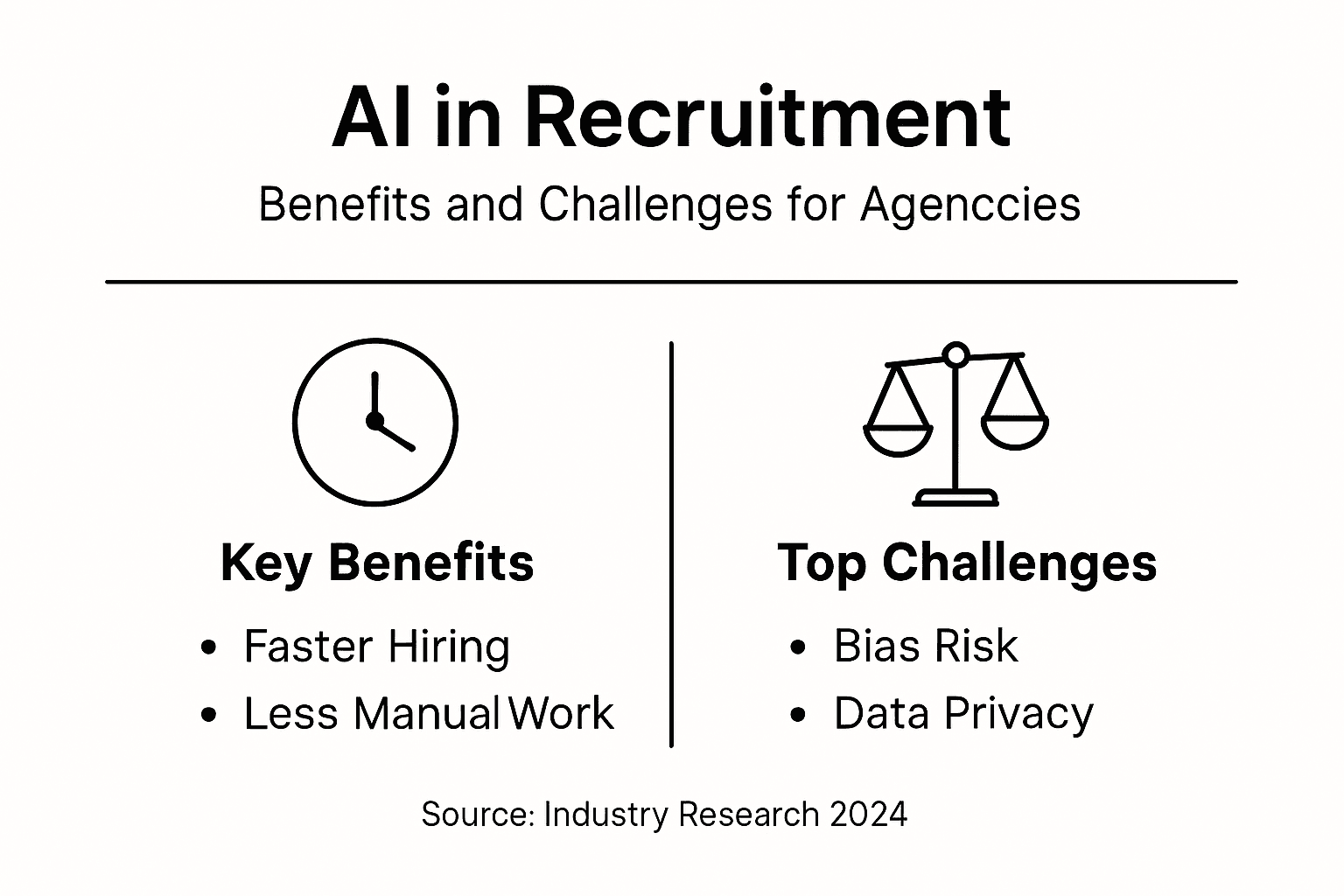
However, successful implementation requires a nuanced approach. Organisations must continuously audit and refine their AI systems to ensure they genuinely promote diversity rather than inadvertently perpetuating existing biases. Transparency, ongoing monitoring, and human oversight remain critical components of ethical AI-driven recruitment.
Pro tip: Develop comprehensive diversity metrics and regularly validate AI algorithms against these benchmarks to maintain genuine inclusivity in recruitment practices.
Legal Obligations and Data Protection Issues
Recruitment agencies navigating AI technologies must carefully address complex legal landscapes surrounding data protection and privacy. Comprehensive legal and ethical frameworks are critical for maintaining compliance and protecting candidate rights across different jurisdictional requirements.
Key legal considerations for AI recruitment technologies include:
- Explicit Candidate Consent: Obtaining clear permission for data processing
- Data Minimisation Principles: Collecting only necessary candidate information
- Transparent Algorithmic Decision-Making: Providing clear explanations of AI assessment processes
- Cross-Border Data Transfer Regulations: Ensuring compliance with international privacy laws
- Right to Explanation: Enabling candidates to understand automated decision mechanisms
Organisations must implement robust governance frameworks that balance technological innovation with stringent legal protections. This involves developing comprehensive data management strategies that prioritise individual privacy while leveraging AI’s analytical capabilities.
The regulatory landscape continues to evolve rapidly, demanding proactive approaches to legal compliance. Recruitment agencies must stay informed about emerging legislation, regularly audit their AI systems, and maintain comprehensive documentation of their data processing activities to mitigate potential legal risks.
Below is a comparison of ethical and legal safeguards for AI recruitment tools:
| Safeguard Type | Example Practice | Primary Benefit | Key Challenge |
|---|---|---|---|
| Ethical Oversight | AI ethics boards, regular audits | Ensures fairness and transparency | Keeping review standards current |
| Legal Compliance | GDPR documentation, cross-border checks | Protects privacy and legal standing | Navigating global regulations |
| Human Monitoring | Intervention in automated decisions | Preserves human judgement | Balancing automation with oversight |
Pro tip: Conduct regular legal audits of AI recruitment technologies and maintain detailed documentation of data processing practices to ensure ongoing regulatory compliance.
Risks, Bias, and Mitigation Strategies
Artificial intelligence introduces complex challenges in recruitment, particularly regarding potential algorithmic biases that can compromise fair hiring practices. Algorithmic bias risks represent significant obstacles that demand proactive and sophisticated mitigation strategies across recruitment technologies.
Key strategies for managing AI bias include:
- Diverse Training Data: Ensuring representative and inclusive data sets
- Algorithmic Transparency: Creating clear, explainable decision-making processes
- Regular Bias Auditing: Continuously monitoring and testing AI systems
- Human Oversight: Maintaining critical human intervention in automated processes
- Interdisciplinary Design Teams: Incorporating diverse perspectives in AI development
Successful bias mitigation requires a multifaceted approach that goes beyond technical solutions. Recruitment agencies must cultivate a comprehensive understanding of how historical prejudices can be inadvertently encoded into algorithmic systems, developing robust frameworks that prioritise fairness and ethical considerations.
Implementing these strategies demands ongoing commitment and collaboration between technologists, HR professionals, and ethical AI experts. By adopting a proactive and transparent approach, organisations can harness AI’s potential while maintaining rigorous standards of equity and inclusivity in talent acquisition.
Pro tip: Establish a dedicated AI ethics review board to regularly assess and recalibrate recruitment algorithms, ensuring continuous alignment with evolving fairness standards.
Empower Your Recruitment with Intelligent AI Assessments
Recruiters today face the challenge of eliminating bias and inefficiencies while enhancing cultural fit and predictive accuracy. As the article highlights, traditional CV screening often falls short in fairness and depth, leading to missed talent and increased workload. Replace outdated methods with data-driven AI solutions such as company challenges, cognitive tests, and AI-powered interviews that truly measure candidate potential beyond the resume.
Experience how WAOTM transforms recruitment by integrating real assessments and cultural matching tools designed to tackle algorithmic bias and enhance diversity. Discover the power of AI-driven recruitment with video pitches and predictive evaluations that ensure faster, fairer, and more insightful hiring decisions.
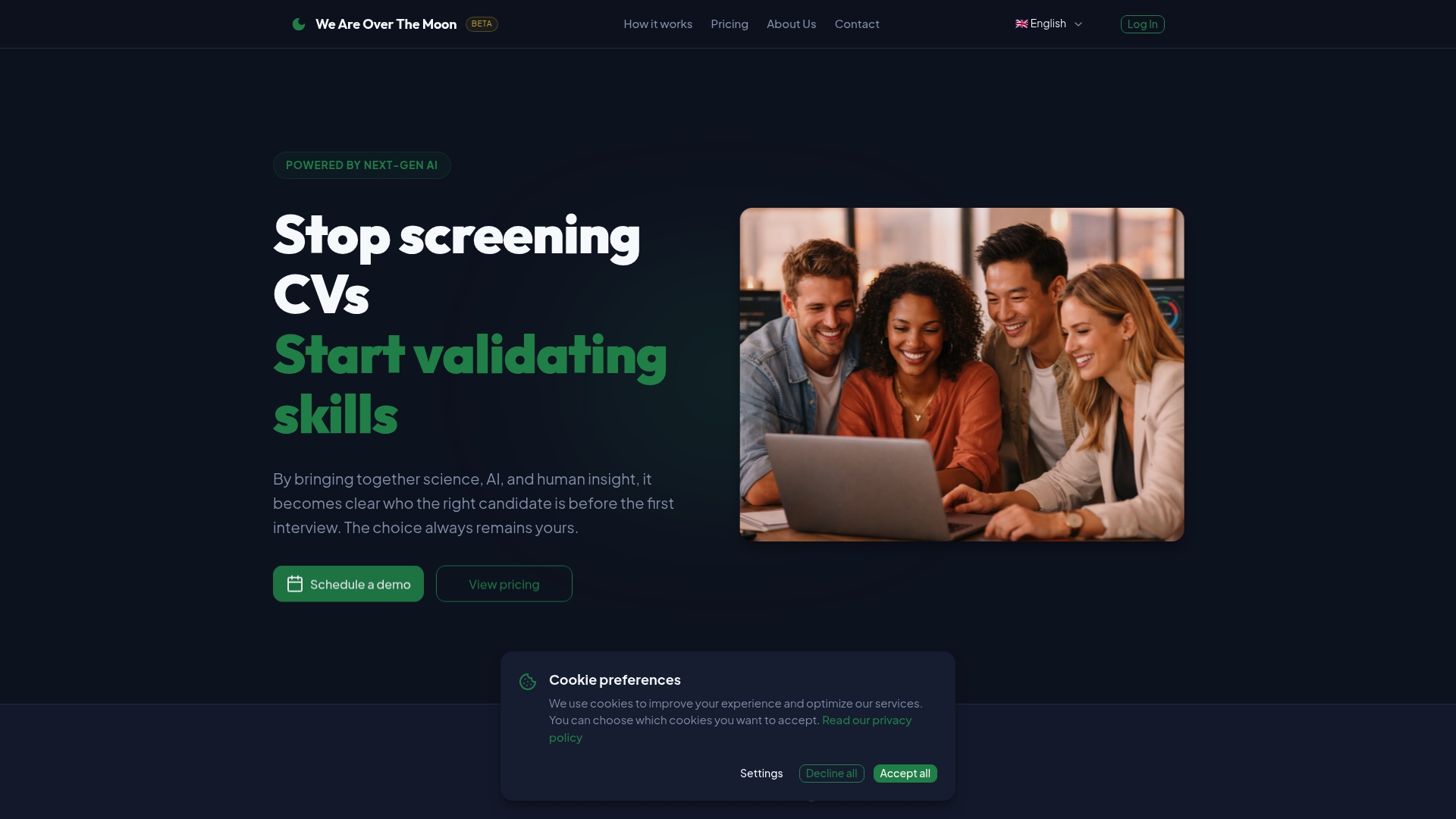
Ready to revolutionise your hiring process and gain a competitive edge through ethical and effective AI recruitment? Visit WAOTM now and start replacing CV screening with meaningful assessments designed for modern recruitment demands. Don’t wait—empower your agency with the future of talent acquisition today.
Frequently Asked Questions
What are the key applications of AI in recruitment?
AI is used in recruitment for candidate sourcing, resume parsing, predictive analytics, and interview scheduling, enhancing efficiency and reducing human bias.
How does AI improve candidate assessment in recruitment?
AI enhances candidate assessment through technologies like video interview analysis, predictive performance modelling, gamified skills assessments, and automated psychological profiling, providing a more objective evaluation process.
What ethical considerations should organisations keep in mind when using AI in recruitment?
Organisations should ensure algorithmic fairness, maintain transparency in selection processes, and monitor AI tools for potential biases to align with human-centric values.
How can recruitment agencies manage algorithmic bias in their AI systems?
Agencies can mitigate algorithmic bias by using diverse training data, ensuring algorithmic transparency, conducting regular bias audits, maintaining human oversight, and involving interdisciplinary design teams.