Explore key types of HR interviews to improve outcomes

Choosing the right interview format can transform your recruitment outcomes. With diverse interview methodologies emerging across Europe, HR professionals in the Netherlands, UK, and Spain face a critical decision: which interview types truly reveal candidate potential and cultural alignment? This article explores proven interview techniques used in these three markets, helping you select methods that balance rigorous skills assessment with authentic cultural fit evaluation. You’ll discover structured approaches, innovative AI-enhanced methods, and practical frameworks to elevate your hiring decisions and build stronger teams.
Table of Contents
- Key takeaways
- Evaluating HR interview selection criteria
- Common HR interview types in the Netherlands
- Innovative HR interview methods popular in the UK
- Distinctive interview techniques in Spain
- Comparing HR interview types across the Netherlands, UK, and Spain
- Boost your recruitment with advanced interview and screening solutions
- Frequently asked questions
Key Takeaways
| Point | Details |
|---|---|
| Interview format balance | Choosing the appropriate interview type requires balancing objectives such as technical skills, behavioural traits and cultural alignment within practical constraints like time and budget. |
| Dutch structured process | Dutch recruitment favours a structured multi stage process including initial screening, behavioural and competency interviews, practical assessments and several rounds. |
| UK competency emphasis | UK practices increasingly prioritise competency, strengths and values with growing use of AI and skills testing. |
| Spanish structured methods | Spanish interviews employ structured methods such as STAR and group dynamics with a cultural emphasis on relationships. |
Evaluating HR interview selection criteria
Selecting the right interview type requires balancing multiple objectives: assessing technical competencies, evaluating cultural alignment, minimising unconscious bias, and delivering positive candidate experiences. Your choice should reflect both your organisational values and practical recruitment constraints like time, budget, and available resources.
Modern HR professionals increasingly recognise that contrasting viewpoints exist between traditional HR cycles and continuous feedback models, influencing how interviews integrate into broader talent management. Similarly, competency-based approaches differ fundamentally from strengths-focused methods, each offering distinct advantages for candidate evaluation.
When evaluating interview types, consider these essential criteria:
- Assessment goals: Define whether you prioritise technical skills, behavioural traits, cultural values, or cognitive abilities
- Candidate experience: Ensure your interview process reflects your employer brand and respects candidate time
- Fairness and bias mitigation: Structure questions consistently and train interviewers to recognise unconscious bias
- Practical constraints: Account for interviewer availability, technology requirements, and time-to-hire targets
- Cultural fit versus culture add: Shift focus from replicating existing team dynamics to adding complementary perspectives
Integrating a cultural fit checklist during hiring helps standardise evaluation whilst maintaining flexibility for individual candidate strengths. Similarly, implementing robust talent screening processes ensures your interview selection aligns with broader recruitment strategy.
Pro Tip: Map each interview stage to specific competencies or values you’re evaluating. This clarity helps interviewers ask targeted questions and makes candidate comparison more objective and defensible.
Common HR interview types in the Netherlands
Dutch recruitment practices emphasise structured, multi-stage processes that thoroughly evaluate both technical capabilities and team compatibility. Netherlands employers typically use initial screening, behavioural and competency-based interviews, practical assessments, and multiple rounds to ensure comprehensive candidate evaluation.
The typical Dutch interview process includes:
- Initial screening: Phone or video calls assess basic qualifications, salary expectations, and availability before investing in lengthier interviews
- Behavioural interviews: Structured questions explore past situations requiring teamwork, problem-solving, and conflict resolution, revealing how candidates actually perform under pressure
- Competency assessments: Role-specific evaluations test technical skills through case studies, presentations, or practical demonstrations
- Cultural fit rounds: Multiple stakeholders meet candidates to evaluate alignment with team dynamics and organisational values
- HR cycle integration: Annual performance reviews and development planning conversations inform ongoing talent assessment beyond initial hiring
Dutch organisations value directness and egalitarian workplace cultures, so interviews often feature frank discussions about expectations, work-life balance, and professional development opportunities. Candidates expect transparency about role challenges and organisational structure.
Practical assessments hold particular weight in Dutch hiring. Rather than relying solely on hypothetical scenarios, many employers ask candidates to complete realistic work samples or solve actual business problems the team faces. This approach provides concrete evidence of capability whilst giving candidates genuine insight into daily responsibilities.
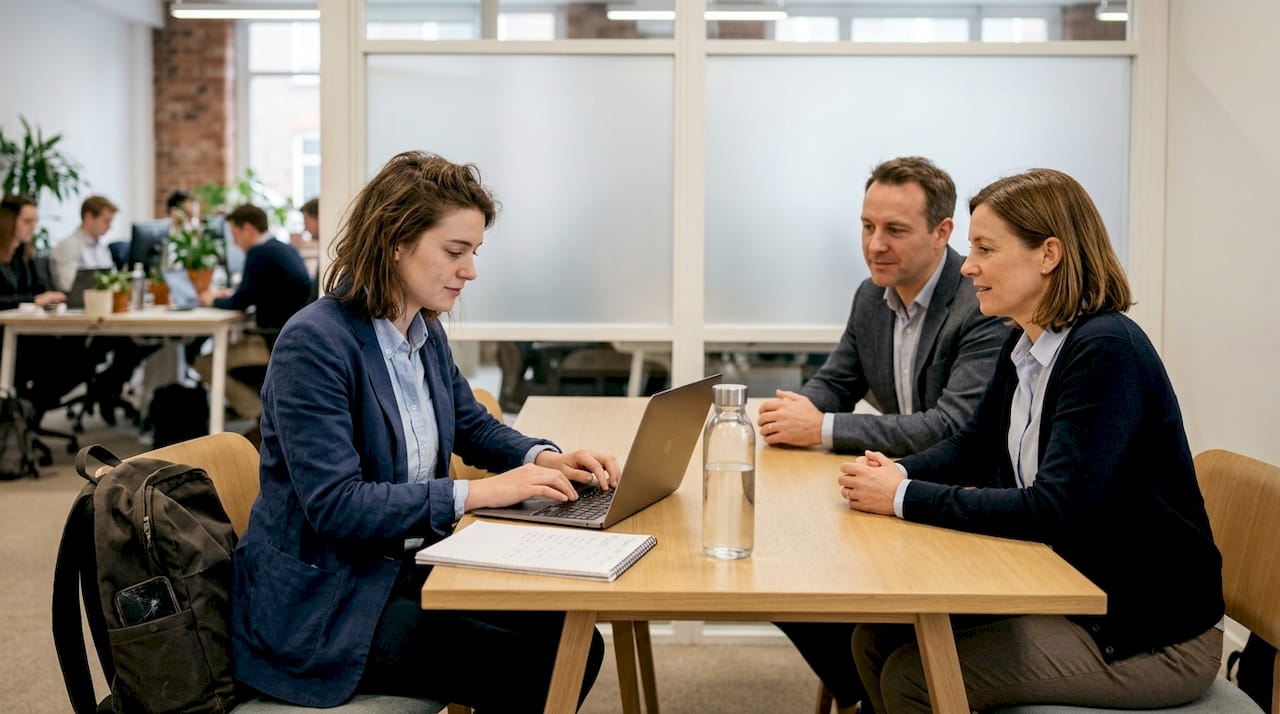
Understanding organisational culture fit during hiring becomes especially important in Dutch contexts, where team consensus and collaborative decision-making shape workplace dynamics. Multiple interview rounds with different team members help ensure new hires integrate smoothly.
Pro Tip: Include scenarios specific to Dutch work culture in behavioural assessments, such as navigating direct feedback conversations or contributing to consensus-based decision-making, to evaluate true cultural compatibility.
Innovative HR interview methods popular in the UK
The UK recruitment landscape embraces innovation whilst maintaining rigorous assessment standards. UK employers increasingly use competency, strengths-based, and values-based interviews alongside virtual formats and AI-supported screening to reduce mis-hires and improve candidate experience.
Key UK interview approaches include:
- Competency-based interviews: Structured questions using the STAR method (Situation, Task, Action, Result) evaluate specific skills through past behaviour examples
- Strengths-based interviews: Questions focus on activities that energise candidates and situations where they excel naturally, rather than solely addressing weaknesses
- Values-based interviews: Organisations like the NHS explore alignment with core values such as compassion, respect, and excellence through scenario-based discussions
- Virtual and hybrid formats: Video interviews, digital assessment centres, and asynchronous recorded responses accommodate flexible working patterns
- Gamified assessments: Interactive simulations and virtual reality scenarios test decision-making and problem-solving in engaging formats
Data shows UK employers using skills tests experience significantly fewer mis-hires compared to CV-only screening. This evidence drives adoption of practical assessments, coding challenges, and work sample tests across sectors.
| Interview approach | Assessment accuracy | Candidate experience | Bias reduction |
|---|---|---|---|
| Traditional CV screening | Moderate | Passive | Low |
| Competency interviews | High | Structured | Moderate |
| Strengths-based | Moderate-High | Engaging | Moderate-High |
| AI-supported screening | High | Efficient | High |
| Skills testing | Very High | Authentic | Very High |
The rise of AI in recruitment and candidate screening enables UK employers to process larger candidate pools whilst maintaining assessment quality. AI tools analyse video interviews for communication patterns, evaluate coding submissions, and match candidate profiles to role requirements with increasing sophistication.
However, successful implementation requires human oversight. AI excels at identifying patterns and screening for baseline qualifications, but human judgement remains essential for evaluating cultural nuance, leadership potential, and interpersonal dynamics.
Many progressive UK employers now screen without CVs entirely, using skills-based challenges and blind assessments to focus purely on capability rather than credentials or background.
Pro Tip: Blend AI-supported tools with human judgement to balance innovation and empathy. Use technology for initial screening and skills validation, then rely on experienced interviewers for final cultural fit and values alignment discussions.
Distinctive interview techniques in Spain
Spanish recruitment practices combine structured methodologies with cultural emphases on personal relationships and organisational hierarchy. Spain demonstrates high adoption of the STAR method at 89%, alongside distinctive group interview techniques like the Grönholm method that evaluate interpersonal dynamics and leadership potential.
Spanish interview characteristics include:
- Structured competency interviews: The STAR framework dominates, providing consistent evaluation criteria across candidates whilst allowing personalised follow-up questions
- Group and panel interviews: Multiple candidates interact simultaneously, revealing collaboration styles, persuasion abilities, and grace under competitive pressure
- Grönholm method: Candidates face deliberately stressful group scenarios designed to surface authentic reactions and decision-making approaches
- Assessment centres: Extended evaluation sessions combine interviews, group exercises, presentations, and psychometric tests for senior or graduate roles
- Cultural relationship focus: Spanish business culture values personalismo (personal connections), so interviews often explore interpersonal warmth and relationship-building capability
Hierarchy and formality matter in Spanish interviews. Candidates typically address interviewers formally and demonstrate respect for organisational structure. Interview questions may explore how candidates navigate authority relationships and contribute to team harmony.
Spanish employers make the majority of final hiring decisions after the last interview round, with 67% of interviews now blending presencial (in-person) and virtual formats. This hybrid approach balances efficiency with the cultural preference for face-to-face relationship building.
The Grönholm method deserves particular attention. This group interview technique deliberately creates tension or ethical dilemmas, observing how candidates handle stress, support teammates, or compete for advantage. Whilst controversial, proponents argue it reveals authentic character more effectively than rehearsed individual interview responses.
Implementing a cultural fit checklist during hiring helps Spanish employers balance traditional relationship-focused assessment with modern competency frameworks, ensuring both technical capability and cultural alignment.
Comparing HR interview types across the Netherlands, UK, and Spain
Understanding how interview practices differ across these three markets helps HR professionals select methods aligned with both local expectations and organisational needs. Each country’s approach reflects distinct cultural values and business norms.
| Aspect | Netherlands | UK | Spain |
|---|---|---|---|
| Primary interview types | Behavioural, competency, practical assessments | Competency, strengths, values, AI-enhanced | STAR method, group/panel, Grönholm |
| Cultural focus | Egalitarian, direct communication, consensus | Innovation, efficiency, values alignment | Relationships, hierarchy, interpersonal warmth |
| Technology adoption | Moderate, practical focus | High, AI and virtual tools | Growing, hybrid formats |
| Typical rounds | 3-4 stages with multiple stakeholders | 2-3 stages, increasingly virtual | 2-3 stages, final decision post-last round |
| Assessment emphasis | Team fit, technical capability | Skills testing, bias reduction | Group dynamics, stress response |
| HR cycle integration | Formal annual cycles common | Continuous feedback trending | Traditional performance reviews |
The Netherlands prioritises thorough, consensus-driven evaluation with multiple team members meeting candidates. This reflects broader Dutch workplace culture valuing equality and collaborative decision-making.
UK practices emphasise innovation and efficiency, rapidly adopting AI tools and skills-based assessments to improve accuracy whilst reducing time-to-hire. The focus on strengths and values reflects contemporary talent management thinking.
Spanish methods maintain structured competency frameworks whilst uniquely emphasising group dynamics and interpersonal assessment. The cultural importance of personal relationships shapes interview content and format choices.
Despite differences, all three markets increasingly recognise that traditional CV screening alone provides insufficient candidate insight. Progressive employers across these countries adopt practical assessments, structured interviews, and technology-enhanced tools to make better hiring decisions.
Boost your recruitment with advanced interview and screening solutions
Selecting the right interview types represents just one element of effective recruitment. Modern HR professionals need integrated platforms that combine multiple assessment methods whilst reducing bias and improving candidate experience.
We Are Over The Moon transforms traditional hiring by replacing CV screening with authentic capability assessment. Our platform combines AI interviews, company challenges, cultural matching algorithms, cognitive tests, and video pitches to reveal genuine candidate potential. You’ll match on skills, not CVs, ensuring every hiring decision rests on demonstrated ability rather than credentials alone.
Whether you’re implementing structured competency interviews in the Netherlands, adopting AI-enhanced screening in the UK, or refining group assessment techniques in Spain, our tools adapt to your specific recruitment context. Discover how innovative assessment technology can elevate your hiring outcomes and build stronger teams. Learn more about our approach to modern talent acquisition.
Frequently asked questions
Which interview types best assess cultural fit in practice?
Behavioural interviews using past situations reveal authentic cultural alignment more reliably than hypothetical questions. Combine structured competency questions with informal team interactions and practical work samples to evaluate both capability and cultural compatibility across multiple touchpoints.
How can I minimise bias when evaluating cultural fit?
Shift from cultural fit to culture add by defining specific values and behaviours you seek rather than vague “team fit” criteria. Use structured interview guides, diverse interview panels, and blind assessment techniques to focus on complementary perspectives rather than replicating existing team composition.
Should I combine traditional and innovative interview methods?
Yes, blending approaches provides comprehensive candidate insight. Use AI and skills tests for objective capability screening, then apply human judgement through behavioural and values interviews to assess nuanced interpersonal and leadership qualities that technology cannot fully evaluate.
What are the main advantages and disadvantages of virtual interviews?
Virtual interviews offer scheduling flexibility, geographic reach, and cost efficiency whilst potentially missing non-verbal cues and reducing personal connection. Compensate by using video rather than phone, allowing extra time for rapport building, and combining virtual screening with in-person final rounds for senior roles.
Can AI replace human judgement in interview processes?
AI excels at screening for qualifications, analysing skills test results, and identifying patterns across large candidate pools, but cannot replace human assessment of cultural nuance, leadership potential, and interpersonal dynamics. Use AI to enhance efficiency and reduce bias in early stages, then rely on experienced interviewers for final evaluation and decision-making.