Why Skills Over Credentials Drives Tech Innovation

Tech startups in the UK and Netherlands face growing challenges as traditional degree-centric recruitment struggles to keep pace with rapid innovation. Skills-first hiring is changing the game by focusing on demonstrable capabilities rather than formal qualifications, giving companies access to a broader pool of adaptable talent. This shift allows HR leaders to match candidates’ real-world competencies with the evolving demands of modern workplaces, laying the foundation for stronger teams and improved organisational fit.
Table of Contents
- Defining Skills-First Versus Credential-Led Hiring
- Key Drivers Behind Skills-Based Recruitment
- Assessment Methods: AI, Challenges, and Cultural Fit
- Impact on Diversity, Retention, and Innovation
- Common Pitfalls in Skills-First Recruitment Shifts
Key Takeaways
| Point | Details |
|---|---|
| Skills-First Hiring | This approach focuses on demonstrable capabilities, assessing real-world skills over academic credentials. |
| Technological Transformation | Rapid technological advancements necessitate new recruitment strategies that prioritise practical skills to fill skills gaps. |
| Enhanced Workforce Diversity | Skills-based recruitment diversifies talent pools, reducing barriers for capable professionals from various backgrounds. |
| AI Integration | While AI offers opportunities for skill assessment, balancing technology with human judgment is crucial to ensure effective evaluations. |
Defining Skills-First Versus Credential-Led Hiring
The traditional recruitment paradigm has long relied on academic credentials as the primary benchmark for candidate assessment. However, the rapid evolution of technology and workplace dynamics is dramatically challenging this conventional approach. Skills-based hiring strategies are emerging as a transformative method for talent acquisition, prioritising practical competencies over formal educational achievements.
At its core, skills-first hiring represents a fundamental shift in recruitment philosophy. Unlike credential-led approaches that predominantly evaluate candidates through degrees and certificates, this methodology focuses on demonstrable capabilities and real-world expertise. By assessing an individual’s actual skill set, organisations can identify talent more accurately and build more adaptable, dynamic workforces.
Key distinctions between skills-first and credential-led hiring include:
- Practical Competence: Skills-first approaches measure actual performance capabilities
- Dynamic Assessment: Evaluates current abilities rather than historical academic achievements
- Broader Talent Pool: Eliminates unnecessary barriers for skilled professionals without traditional credentials
- Future-Oriented: Prioritises adaptability and learning potential over static qualifications
Research from industry experts demonstrates that skills-based hiring enhances employee performance and organisational outcomes more effectively than traditional credential-focused recruitment. By valuing practical expertise and adaptability, companies can build more innovative and responsive teams.
Pro tip: Develop standardised skill assessment protocols that objectively measure candidates’ practical capabilities across multiple dimensions.
To clarify strategic differences, here is a side-by-side comparison of skills-first and credential-led hiring approaches:
| Aspect | Skills-First Hiring | Credential-Led Hiring |
|---|---|---|
| Assessment focus | Real-world skills and abilities | Academic degrees and certificates |
| Candidate advantage | Broadens access to diverse talent | Favour graduates and degree holders |
| Adaptability | Emphasises flexibility and growth | Relies on static past achievements |
| Recruitment outcome | Builds innovative, agile teams | May overlook hidden potential |
Key Drivers Behind Skills-Based Recruitment
The contemporary job market is experiencing a profound transformation driven by technological disruption and changing workforce dynamics. Emerging recruitment strategies are fundamentally challenging traditional hiring approaches by prioritising practical skills over static academic credentials.
Multiple critical factors are accelerating this recruitment revolution. Rapid technological advancement is creating unprecedented skills gaps, where traditional educational pathways struggle to keep pace with emerging job requirements. Automation, artificial intelligence, and digital transformation are rendering many conventional qualifications increasingly obsolete, compelling organisations to develop more agile and responsive talent acquisition strategies.
Key drivers propelling skills-based recruitment include:
- Technological Acceleration: Emerging technologies outpace traditional educational curricula
- Talent Accessibility: Expanding candidate pools beyond traditional credential boundaries
- Diversity and Inclusion: Removing systemic barriers that exclude capable professionals
- Economic Adaptability: Creating more responsive and dynamic workforce development models
Global workforce research indicates that skills-first approaches democratise opportunity structures, enabling organisations to identify talent based on genuine capability rather than historical educational achievements. This paradigm shift supports more equitable economic participation and promotes innovation by valuing practical expertise over formal qualifications.
Pro tip: Implement comprehensive skills assessment frameworks that objectively evaluate candidates’ real-world competencies across multiple professional dimensions.
Assessment Methods: AI, Challenges, and Cultural Fit
Artificial intelligence has emerged as a transformative tool in modern recruitment, fundamentally reshaping how organisations evaluate candidate potential. Advanced assessment technologies are revolutionising talent acquisition by providing nuanced, objective mechanisms for measuring professional capabilities beyond traditional credential-based evaluations.

The integration of AI-driven assessment methods presents both extraordinary opportunities and significant challenges. These sophisticated technologies enable organisations to conduct comprehensive skill evaluations through practical simulations, cognitive tests, and adaptive assessment protocols. By leveraging machine learning algorithms, recruiters can generate more precise insights into a candidate’s actual capabilities, moving beyond superficial qualifications to understand deeper professional competencies.
Key considerations in AI-powered skills assessment include:
- Objective Measurement: Standardising evaluation criteria across candidate pools
- Bias Reduction: Minimising human prejudices in recruitment processes
- Dynamic Testing: Creating adaptive assessments that reflect real-world job challenges
- Holistic Evaluation: Balancing quantitative skill metrics with qualitative cultural insights
Workforce research highlights the critical importance of blending automated assessments with human judgment. Successful skills-first approaches require continuous calibration of AI tools, ensuring that technological measurements align with genuine job performance requirements and organisational culture needs.
Pro tip: Develop hybrid assessment frameworks that combine AI-driven skill measurements with structured human interviews to capture both technical competence and interpersonal dynamics.
Impact on Diversity, Retention, and Innovation
The transition towards skills-based recruitment represents more than a mere hiring methodology - it is a fundamental reimagining of workforce development. Transformative hiring approaches are dismantling traditional barriers that have historically limited opportunities for talented professionals from diverse backgrounds.
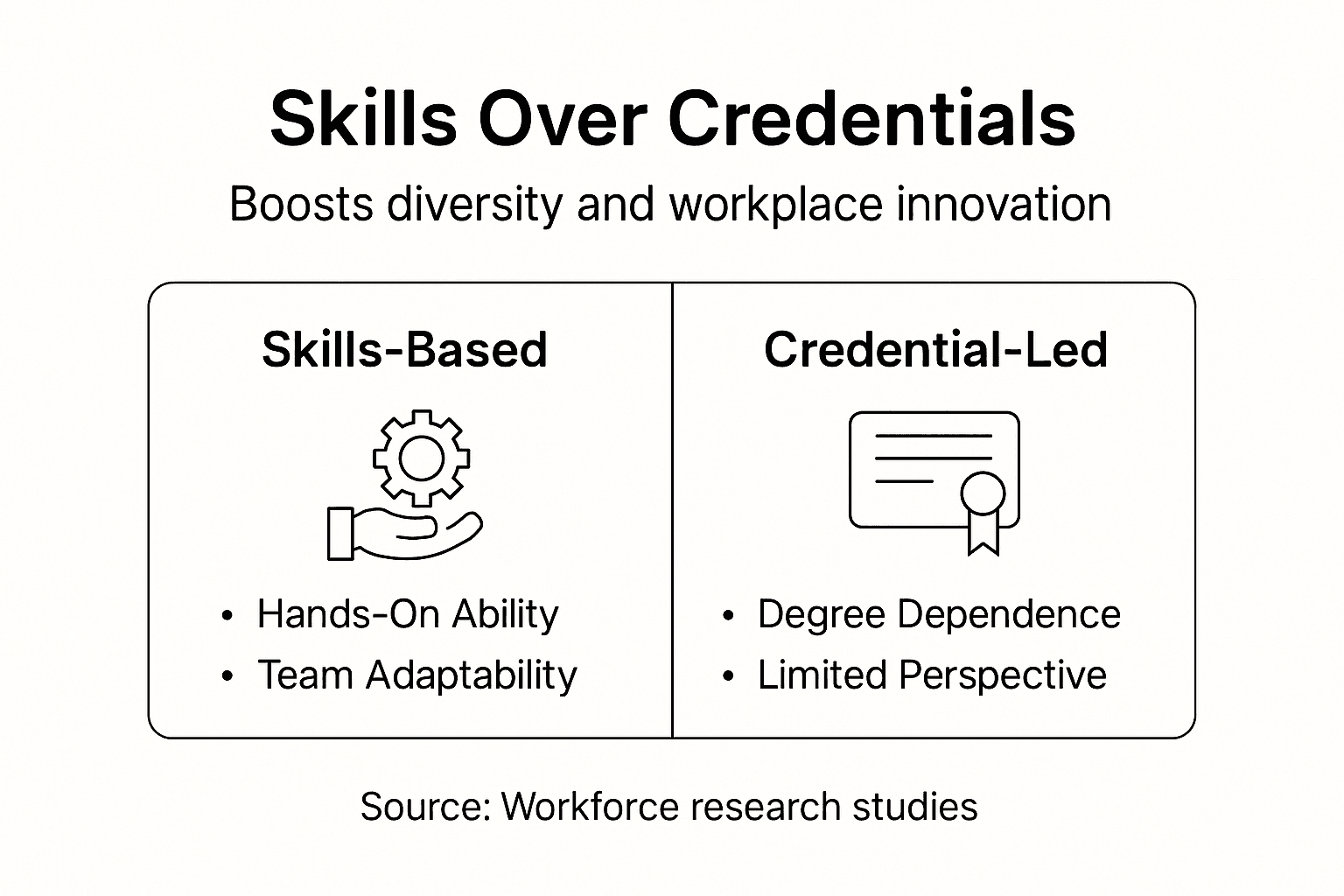
By prioritising practical capabilities over formal credentials, organisations unlock a profound mechanism for enhancing workforce diversity and driving institutional innovation. This approach fundamentally challenges traditional recruitment paradigms that have inadvertently perpetuated systemic exclusions, creating pathways for talented individuals who might have been overlooked by conventional screening processes.
Key impacts of skills-first recruitment include:
- Expanded Talent Pools: Accessing previously marginalised professional communities
- Reduced Hiring Bias: Minimising discriminatory recruitment practices
- Enhanced Innovation: Incorporating diverse problem-solving perspectives
- Improved Retention: Matching genuine capabilities with organisational needs
Global workforce research demonstrates that skills-based strategies support more adaptive and innovative organisations. By valuing actual competencies, companies create environments where employees feel genuinely recognised for their contributions, driving deeper engagement and institutional resilience.
Pro tip: Design comprehensive skills assessment frameworks that systematically evaluate candidate capabilities across multiple dimensions, ensuring holistic and equitable talent evaluation.
Common Pitfalls in Skills-First Recruitment Shifts
Transitioning to skills-based recruitment is not a simple linear process, but a complex strategic transformation requiring nuanced implementation. Comprehensive organisational preparation is essential to avoid critical mistakes that can undermine the entire recruitment approach.
One of the most significant challenges organisations encounter involves creating robust, objective skill assessment mechanisms. Without carefully designed evaluation frameworks, companies risk replacing credential bias with equally problematic skill measurement inconsistencies. The danger lies not in abandoning traditional credentials, but in implementing superficial or poorly constructed alternative assessment strategies that fail to capture genuine professional capabilities.
Key pitfalls in skills-first recruitment include:
- Automated Assessment Limitations: Over-relying on technological tools without human oversight
- Inconsistent Evaluation Methods: Lacking standardised skill measurement protocols
- Communication Gaps: Failing to clearly articulate required competencies
- Cultural Resistance: Encountering internal pushback from traditional HR approaches
Innovative recruitment strategies emphasise the importance of balanced implementation. Successfully navigating skills-first recruitment requires a holistic approach that integrates technological tools, human judgment, and organisational cultural transformation.
Pro tip: Develop multi-dimensional skill assessment protocols that combine automated screening, structured interviews, and practical demonstration tasks to ensure comprehensive candidate evaluation.
Below is a summary of key recruitment technology impacts and possible pitfalls to watch for during skills-first adoption:
| Recruitment Technology Impact | Potential Pitfall | Mitigation Strategy |
|---|---|---|
| AI-powered skill assessment | Lacks human context | Blend with structured interviews |
| Automated screening tools | Inconsistent measurement standards | Standardise skill assessment protocols |
| Digital simulation exercises | Overemphasis on technical skills | Include cultural and soft skills eval |
| Machine learning analytics | Risk of algorithmic bias | Regular calibration and human review |
Embrace Skills-First Hiring to Unlock True Tech Innovation
The article highlights how prioritising practical skills over traditional credentials is essential for staying ahead in today’s rapidly evolving tech landscape. If you are struggling with ineffective CV screenings and missing out on genuine talent, it’s time to rethink your recruitment strategy. Focus on real assessments, such as AI interviews, company challenges, cognitive tests and cultural matching, to identify candidates who truly fit your needs and drive innovation.
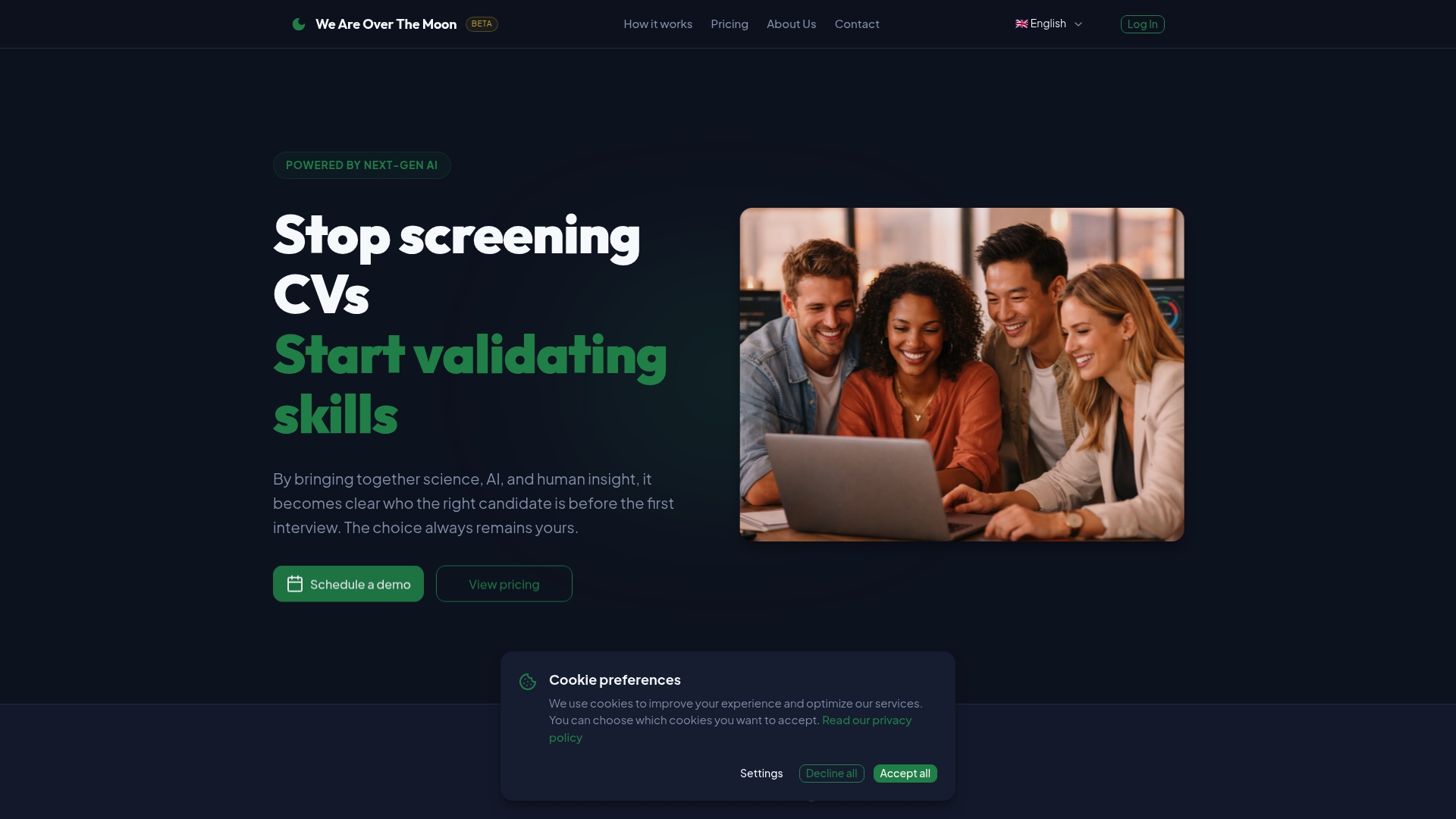
Discover how you can replace outdated credential-led hiring with dynamic, skills-based evaluations at WAOTM. Take action now to build diverse, agile teams that excel in adaptability and creativity. Start your journey with skills-first hiring solutions designed to bring measurable results and reduce bias. Don’t wait to transform your recruitment and empower your organisation with top-tier talent ready for tomorrow’s challenges.
Frequently Asked Questions
What is skills-first hiring?
Skills-first hiring is a recruitment approach that prioritises practical abilities and real-world competencies over traditional academic credentials. This allows organisations to assess candidates based on their actual skills rather than their formal qualifications.
How does skills-based hiring enhance innovation in the workplace?
Skills-based hiring fosters innovation by creating diverse teams that incorporate varied problem-solving perspectives. By valuing practical expertise, organisations can adapt more quickly to changes and drive creative solutions.
What are the main challenges of adopting a skills-first recruitment approach?
Common challenges include developing robust skill assessment mechanisms, ensuring consistent evaluation standards, and overcoming internal resistance from established HR practices. It’s crucial to implement a balanced approach that incorporates both technology and human judgment.
How can organisations improve their skills assessment methods?
Organisations can enhance their skills assessment methods by developing multi-dimensional evaluation protocols that include automated screening, structured interviews, and practical demonstration tasks. This comprehensive framework ensures a thorough and equitable evaluation of candidates.