Top workplace culture assessment lists for 2026

TL;DR:
- Choosing the right culture assessment tool depends on your specific cultural challenge and regional context.
- Combining quantitative surveys with qualitative methods provides the most accurate and actionable insights.
- Regular assessments and meaningful leadership dialogue are essential for driving cultural change and improving hiring outcomes.
Choosing the right workplace culture assessment is one of the most consequential decisions an HR leader can make. Get it wrong and you end up with data that tells you very little, a workforce that feels surveyed rather than heard, and no clear path forward. Get it right and you gain a genuine competitive edge, sharper hiring decisions, and a culture that actually attracts and retains top talent. Whether you are hiring across the Netherlands, the UK, or Spain, this guide gives you a practical, evidence-based framework to evaluate, compare, and act on the best tools available today.
Table of Contents
- How to evaluate workplace culture assessments
- Top workplace culture assessment tools for European companies
- Comparison of top workplace culture assessment tools
- When and how to use each tool for maximum impact
- Our perspective: What most guides miss about culture assessment lists
- Connect assessment insights with better hiring decisions
- Frequently asked questions
Key Takeaways
| Point | Details |
|---|---|
| Define clear criteria | Start with what you want to measure—whether culture, climate, or behaviour—for best results. |
| Choose validated tools | Opt for assessments with proven track records and robust benchmarking like OCI or OCAI. |
| Combine methods | Mix quantitative surveys with qualitative insights to minimise bias and reveal hidden norms. |
| Tailor to your region | Leverage both global and regional tools relevant to the Netherlands, UK, and Spain for nuanced insights. |
| Link results to action | Ensure survey outcomes drive dialogue, interventions, and link to performance KPIs. |
How to evaluate workplace culture assessments
Before you pick a tool, you need to know what you are actually trying to measure. Culture is not a single thing. It includes climate (how people feel day to day), behaviours (what people actually do), and norms (the unwritten rules everyone follows). Mixing these up leads to muddy results and wasted effort. Start with a clear brief: what specific cultural challenge are you trying to solve?
Once you know that, methodology becomes your next decision point. Quantitative tools like surveys give you scalable, comparable data. Qualitative approaches like focus groups and interviews surface the stories and nuances that numbers miss. The best assessments blend both, and understanding culture survey basics before you commit to a tool will save you a lot of headaches later.
Here is a practical checklist to guide your evaluation:
- Clarity of construct: Does the tool clearly define what it measures, climate, behaviours, or norms?
- Methodology: Is it quantitative, qualitative, or a mix? Methodologies vary significantly, with OCI using a Circumplex model measuring 12 behavioural norms, while OCAI and DOCS use entirely different frameworks.
- Validation and benchmarking: Does the tool have a robust dataset to compare your results against?
- Regional relevance: Is the tool recognised and trusted in the Netherlands, UK, or Spain?
- Actionability: Does it link results to specific interventions and business KPIs?
- Subculture analysis: Can it identify differences between departments or locations?
- Psychological safety: Does the tool allow anonymous responses to encourage honest answers?
Also watch out for common pitfalls that trip up even experienced HR teams, such as choosing a tool based on brand recognition alone rather than fit for purpose.
Pro Tip: Always pilot a culture assessment with a small, diverse group before rolling it out organisation-wide. This surfaces confusing questions and reveals whether the tool resonates across different demographics and roles.
Top workplace culture assessment tools for European companies
Using these evaluation criteria, let us explore the top culture assessment solutions trusted by European HR leaders. Each tool has a distinct focus, so the right choice depends on your specific context and goals.
Key assessment tools span a wide range of methodologies and regional strengths. Here is a breakdown of the leading options:
-
Human Synergistics OCI (Organisational Culture Inventory): Widely regarded as the gold standard for validation. It measures 12 behavioural norms using a Circumplex model and is backed by decades of academic research. Best for organisations that need rigorous, defensible data.
-
Denison DOCS (Denison Organisational Culture Survey): Focuses on the link between culture and business performance. It measures four traits: involvement, consistency, adaptability, and mission. Strong benchmarking database across industries.
-
OCAI (Organisational Culture Assessment Instrument): Based on the Competing Values Framework, this tool is fast, accessible, and used by over 10,000 organisations globally. OCAI-online.nl is a popular Netherlands-specific platform for this tool.
-
Culture Amp: A modern, people-focused platform that combines engagement, performance, and culture data. Particularly popular with tech-forward HR teams across Europe.
-
Qualtrics EmployeeXM: A powerful enterprise solution with deep analytics and integration capabilities. Ideal for large organisations with complex data needs.
-
PI Employee Experience Survey: Focuses on the employee experience and its connection to engagement and retention. Good for teams already using the Predictive Index ecosystem.
-
Deepler (Netherlands): A region-specific tool designed for Dutch organisations, offering culturally nuanced questions and local benchmarking data.
For teams focused on cultural matching tips during recruitment, pairing one of these tools with your hiring process creates a much stronger foundation for long-term fit.
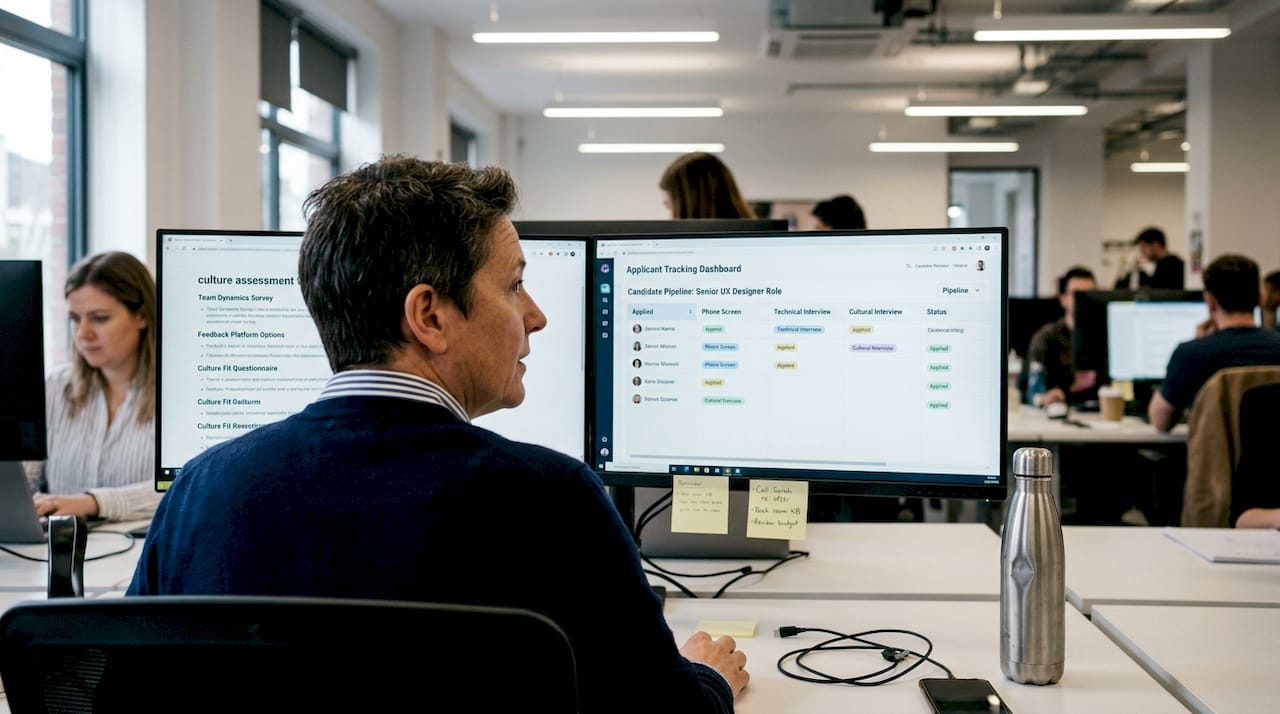
Comparison of top workplace culture assessment tools
With a sense of each major assessment, see how they stack up side by side.
| Tool | Methodology | Region | Validated | Benchmarking | Analysis type | Unique feature |
|---|---|---|---|---|---|---|
| OCI | Circumplex/Quantitative | Global | Strong | Yes | Behavioural norms | 12-norm model |
| DOCS | Survey/Quantitative | Global | Strong | Yes | Performance link | 4 cultural traits |
| OCAI | Survey/Quantitative | Global/NL | Moderate | Yes | Values framework | Fast, accessible |
| Culture Amp | Survey/Mixed | Global | Moderate | Yes | Engagement focus | Modern UX |
| Qualtrics EmployeeXM | Survey/Quantitative | Global | Strong | Yes | Enterprise analytics | Deep integrations |
| Deepler | Survey/Qualitative | Netherlands | Moderate | NL-specific | Regional nuance | Dutch benchmarks |
Surveys typically run between 15 and 50 questions, are mostly anonymous, and draw on benchmarking databases to contextualise your results. That anonymity piece matters enormously. Without it, you risk getting the answers people think you want, not the truth.
Key decision points to keep in mind:
- Validity: OCI leads the field here, with the most robust academic backing.
- Benchmarking scope: Qualtrics and Denison DOCS offer the broadest cross-industry comparisons.
- Link to performance metrics: DOCS is specifically designed to connect culture scores to business outcomes.
- Regional fit: Deepler and OCAI-online.nl are purpose-built for Dutch organisations.
OCAI is used by over 10,000 organisations globally, making it one of the most widely adopted culture assessment tools in the world.
For practical guidance on applying these insights to your hiring process, explore our culture fit guidance and the cultural fit checklist to see how assessment data translates into smarter recruitment decisions.
When and how to use each tool for maximum impact
After comparing the tools, it is essential to know the context for their most effective use. Not every tool suits every situation, and deploying the wrong one at the wrong time can actually set your culture work back.
Here are the scenarios where specific tools shine:
- Mergers and acquisitions: OCI or DOCS work well here because they surface deep behavioural norms and performance links, helping you identify cultural clashes before they become costly.
- Remote or hybrid expansion: Culture Amp and Qualtrics EmployeeXM handle distributed teams well, with strong digital delivery and real-time analytics.
- New talent strategy: OCAI is a great starting point because it is quick to deploy and gives leadership a shared language around culture types.
- Netherlands-specific hiring: Deepler or OCAI-online.nl offer local benchmarking that global tools simply cannot match.
A typical deployment cycle runs every 6 to 12 months. Running assessments more frequently than that risks survey fatigue; less frequently and you miss important shifts. Qualitative methods combined with quantitative surveys are essential for accurate culture assessments, so always plan follow-up focus groups or interviews to interpret your data properly.
Be aware of the limits too. Surveys risk bias when psychological safety is low, leading to strategic or defensive answers that mask the real culture. Subcultures within large organisations can also create blind spots if your analysis only looks at aggregate data.
‘Boards should link cultural assessment outcomes directly to business KPIs to drive change.’
Pro Tip: Rotate your survey tool every two or three cycles. Familiarity breeds predictable answers. A fresh tool asks different questions and surfaces new insights that a familiar one might miss.
For a deeper look at putting this into practice, the cultural fit assessment guide and our thinking on AI for cultural fit show how assessment data can directly improve your hiring outcomes.
Our perspective: What most guides miss about culture assessment lists
Most articles on this topic hand you a list and call it done. We think that misses the point entirely. A list of tools is only useful if it sparks real conversations inside your organisation. We have seen HR teams run beautifully validated surveys, produce polished reports, and then watch nothing change because leadership treated the results as a compliance exercise rather than a call to action.
The truth is, culture assessment lists are prompts, not solutions. The real work happens in the dialogue that follows. What do the results mean for us? What are we willing to change? Who is accountable?
We also believe strongly that annual survey cycles alone are not enough. Regular, data-driven experimentation, trying new questions, testing different formats, and acting on small signals quickly, creates far more cultural momentum than a once-a-year report ever will. Explore how AI culture matching can support this kind of ongoing, agile approach to culture measurement.
Connect assessment insights with better hiring decisions
Ready to put these insights into action? Understanding your workplace culture is only half the equation. The other half is making sure every new hire genuinely fits and strengthens that culture from day one.
At WAOTM, we help European HR teams go beyond CV screening with real assessments: AI interviews, company challenges, skill-based culture matching, cognitive tests, and video pitches. Our platform is built to connect your culture data with smarter candidate evaluation, so you hire people who truly belong. Whether you are in Amsterdam, London, or Madrid, AI candidate validation gives your team the confidence to make hiring decisions that last. Explore what WAOTM can do for your organisation today.
Frequently asked questions
What is a workplace culture assessment list?
A workplace culture assessment list is a set of criteria or tools HR teams use to measure and compare organisational culture. Key tools include OCI, DOCS, OCAI, Culture Amp, and Qualtrics EmployeeXM, each with distinct methodologies and strengths.
Which culture assessment tool is most used in Europe?
The OCAI is widely adopted across Europe, particularly in the Netherlands, and is used by over 10,000 organisations globally for cultural profiling and values-based analysis.
How often should HR teams run workplace culture assessments?
It is best practice to run major culture assessments every 6 to 12 months for ongoing insight. Assessment cycles of 6 to 12 months are widely recommended to balance depth of insight with avoiding survey fatigue.
What are the risks of relying only on surveys for culture measurement?
Surveys can miss deep norms and may skew results if psychological safety is low. Combining qualitative methods with quantitative surveys helps fill these gaps and produces a far more accurate picture of your organisation’s true culture.
Recommended
- Qualities of top candidates: innovative assessment methods for HR leaders 2026 | We Are Over The Moon
- Guía para alinear talento y cultura organizacional 2026
- How to Match Company Culture with AI Assessments | We Are Over The Moon
- Why assessments outperform CVs for hiring success in 2026 | We Are Over The Moon