Soft skills in recruitment: 89% of bad hires lack them

TL;DR:
- Most bad hires in Europe are due to missing soft skills rather than technical gaps.
- Assessing soft skills with structured, unbiased methods improves retention, performance, and team dynamics.
- Regional trends show low adoption of skills-first hiring, but companies are increasingly evaluating potential beyond CVs.
Think your last bad hire was just a skills gap on paper? Across Europe, 89% of bad hires are linked not to technical shortcomings but to missing soft skills. That is a striking number, and it should prompt every HR professional and talent acquisition leader to rethink what they are actually measuring during recruitment. This guide walks through the evidence, the common pitfalls, and the practical steps you can take to put soft skills at the heart of your hiring process, whether you are based in the Netherlands, the UK, or Spain.
Table of Contents
- Why soft skills matter more than ever in hiring
- The impact of soft skills on recruitment outcomes
- Common challenges and biases in assessing soft skills
- Practical strategies for integrating soft skills assessment into hiring
- Soft skills in context: Differences and trends across the Netherlands, UK, and Spain
- Why traditional hiring misses hidden soft skills and what really works
- Find your next great hire powered by soft skills and real evidence
- Frequently asked questions
Key Takeaways
| Point | Details |
|---|---|
| Soft skills drive success | Soft skills are critical in hiring, impacting productivity, retention, and long-term growth. |
| Objective assessment matters | Using structured tools and rubrics helps to fairly measure and validate soft skills. |
| Avoid common pitfalls | Beware of interview bias, unstructured CV reliance, and digital tool limitations when assessing soft skills. |
| Regional trends vary | The UK, Netherlands, and Spain show unique approaches and ongoing initiatives in soft skills hiring. |
Why soft skills matter more than ever in hiring
Soft skills are the human qualities that shape how people work together, adapt to change, and grow into leadership roles. Communication, empathy, teamwork, adaptability, and problem-solving are not nice-to-haves. They are the engine behind high-performing teams.
The data backs this up convincingly. 92% of talent professionals now regard soft skills as equal to or more important than technical abilities. That is a remarkable shift from even a decade ago, when qualifications and hard skills dominated job criteria almost entirely.
“Soft skills are no longer a secondary consideration in hiring. They are the primary indicator of long-term success in a role.”
Across Europe, this shift is visible in job postings and hiring frameworks alike. Rising demand for soft skills in job adverts across the UK, Netherlands, and Spain reflects a consistent move towards valuing what candidates bring beyond their technical credentials.
So which soft skills are employers prioritising right now?
- Communication: The ability to convey ideas clearly, listen actively, and adapt messaging to different audiences.
- Teamwork: Collaborating effectively across departments, cultures, and working styles.
- Adaptability: Staying productive and positive when priorities shift or challenges arise unexpectedly.
- Empathy: Understanding colleagues and clients on a human level, which drives better relationships and outcomes.
- Problem-solving: Approaching obstacles with creativity and a constructive mindset.
These qualities underpin everything from day-to-day team dynamics to long-term leadership potential. A candidate who scores brilliantly on a technical test but struggles with empathy or communication will often create friction that ripples across an entire team. That is why a robust soft skills assessment strategy is no longer optional for forward-thinking HR teams.
The impact of soft skills on recruitment outcomes
Knowing that soft skills matter is one thing. Seeing exactly how they influence business results is another. The evidence is compelling, and it points clearly in one direction.
Soft skills training alone can boost productivity and retention by as much as 12%. That is a meaningful return on investment for any organisation willing to prioritise these qualities from the moment a candidate enters the hiring funnel.
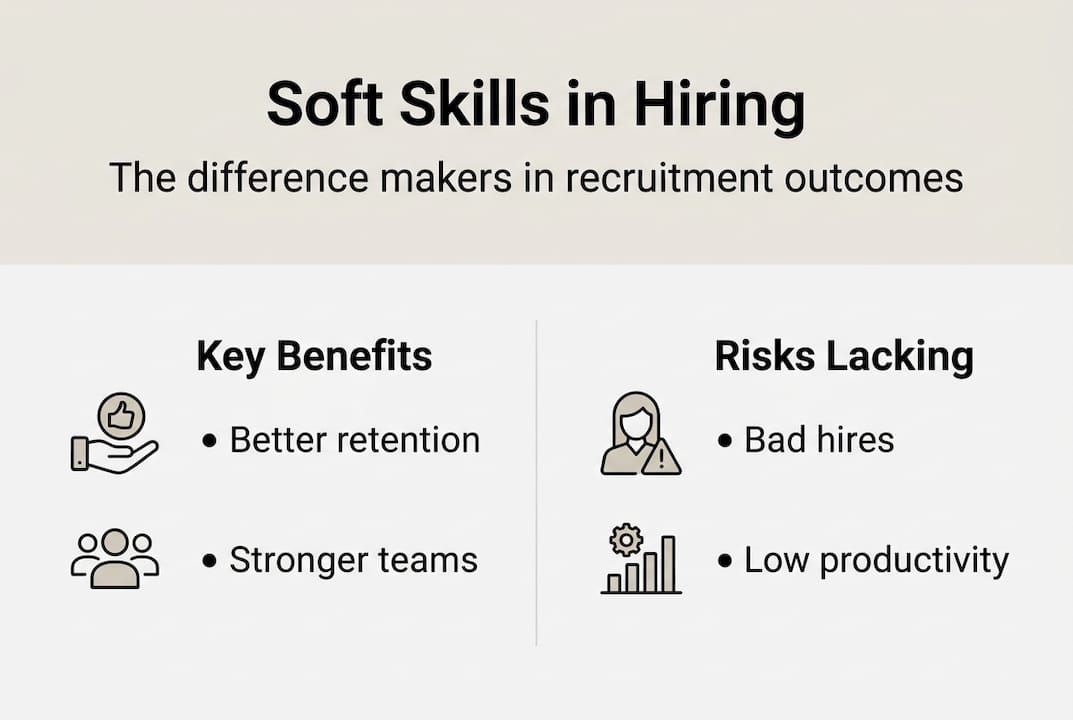
Here is a snapshot of how soft skills affect key recruitment metrics:
| Metric | Impact of strong soft skills |
|---|---|
| Retention rate | Significantly higher over 12 months |
| Team productivity | Up to 12% improvement |
| Mis-hire rate | Substantially reduced |
| Onboarding speed | Faster integration into teams |
In Spain, 20% of selection processes fail due to skills mismatches, with soft skills gaps frequently cited as the root cause. That represents a significant cost in time, resources, and team morale for organisations across the country.
Here are the most impactful ways soft skills drive better outcomes:
- Reduced mis-hires: Candidates assessed on soft skills are more likely to align with team culture and role demands.
- Stronger retention: Employees who fit the social and collaborative fabric of a team stay longer.
- Better performance: Adaptability and communication directly correlate with output quality.
- Healthier team dynamics: Empathy and teamwork skills reduce conflict and improve collaboration.
- Faster onboarding: Socially aware candidates integrate more quickly and confidently.
Pro Tip: Rather than relying on CVs alone, explore examples of soft skills tests to build a more complete picture of each candidate. Pairing these with a structured talent screening guide gives your team a repeatable, evidence-based framework.
Common challenges and biases in assessing soft skills
Despite their growing importance, evaluating soft skills is genuinely tricky. Traditional interviews, while familiar, carry significant risks that HR teams need to address head-on.
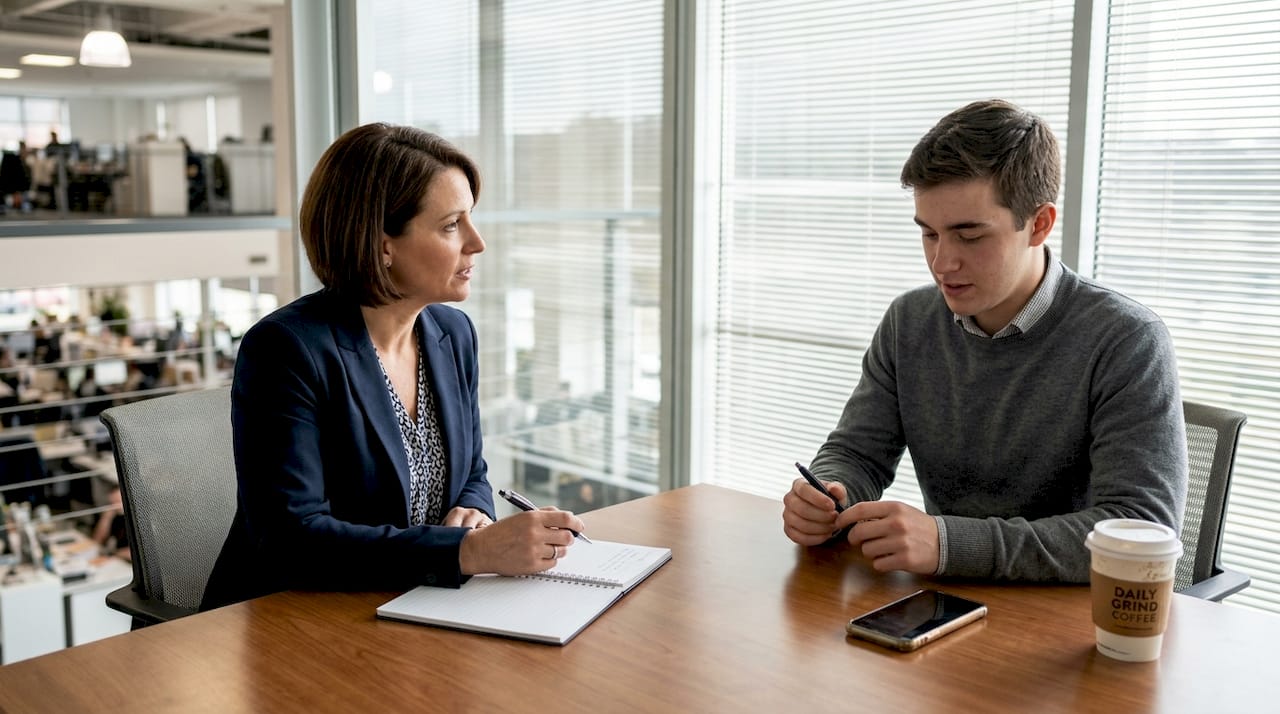
Research shows that bias in traditional interviews can systematically disadvantage neurodiverse candidates and those from lower socio-economic backgrounds. Interviewers unconsciously favour candidates who mirror their own communication styles, which means brilliant potential can go unnoticed simply because it does not present in a familiar way.
Digital and AI-based tools introduce a different set of challenges. While they can reduce certain human biases, they can also perpetuate unseen algorithmic biases and raise legitimate privacy concerns if not implemented transparently.
The most common pitfalls HR teams encounter include:
- Over-reliance on CVs: A CV tells you what someone has done, not how they work with others or handle pressure.
- Vague interview questions: Asking “Are you a team player?” invites rehearsed answers rather than genuine insight.
- Unstructured digital tools: Platforms without clear validation frameworks can introduce new biases under the guise of objectivity.
- Confirmation bias: Interviewers who form early impressions tend to seek evidence that confirms them rather than challenges them.
The good news is that these pitfalls are avoidable. Exploring AI in recruitment with a critical eye helps you identify tools that are genuinely transparent and fair. It is also worth considering screening without CVs as a starting point for more inclusive hiring.
Pro Tip: Blend structured behavioural interviews, validated psychometric tools, and transparent AI assessments to create a process that is both inclusive and evidence-based. No single method is enough on its own.
Practical strategies for integrating soft skills assessment into hiring
Now that you know the pitfalls, here is how HR leaders can systematically and fairly bring soft skills assessments into everyday hiring. The key is structure. Without it, assessments become inconsistent and open to bias.
Structured tools and rubrics are proven to mitigate bias and validate soft skills in a way that is defensible and repeatable. When every candidate is evaluated against the same criteria, you create fairness and generate data you can actually learn from.
In the AI era, transversal skills such as learning agility and adaptability are particularly valuable. These are the qualities that allow employees to grow with your organisation rather than becoming stuck when their role evolves.
“The organisations that will thrive are those that hire for potential, not just for what someone already knows.”
Here is a practical five-step framework for embedding soft skills assessment into your hiring process:
- Clarify your skills criteria: Define which soft skills matter most for each role before you post a single job advert.
- Choose valid assessment methods: Select tools with proven reliability, whether behavioural interviews, psychometric tests, or structured video assessments.
- Train your interviewers: Even the best tools fail without trained people behind them. Invest in calibration sessions.
- Use data to reduce bias: Track patterns in your assessments to spot where bias might be creeping in.
- Validate with post-hire results: Compare assessment scores with actual performance data to continuously improve your approach.
A detailed assessment checklist can help you stay consistent across every stage. Pair it with a clear screening workflow to ensure nothing falls through the cracks.
Soft skills in context: Differences and trends across the Netherlands, UK, and Spain
Finally, it is vital to recognise local nuances. Each country brings its own cultural context, regulatory environment, and pace of change to soft skills hiring.
Soft skills-first hiring remains relatively low across the Netherlands and UK, with only 7 to 8% of hiring processes being truly skills-first. Yet both countries have active initiatives working to bridge the gap between education and employment through validated soft skills frameworks.
| Country | Key trend | Notable challenge |
|---|---|---|
| Netherlands | EVC skills passports for non-traditional candidates | Low uptake of fully skills-first hiring |
| UK | 43% of firms trialling skills-based models | Inconsistent adoption across sectors |
| Spain | Growing awareness of soft skills value | 20% process failure rate from skills mismatch |
Here is what stands out in each market:
- Netherlands: The EVC (Erkenning van Verworven Competenties) system enables candidates with non-traditional backgrounds to validate their soft skills formally, which is a genuinely exciting development for inclusive hiring.
- UK: Skills-based hiring is gaining momentum, with 43% of firms now trialling new models that move beyond degree requirements.
- Spain: Despite higher process failure rates, there is a growing push from employers and HR bodies to embed soft skills validation into standard recruitment practice.
Across all three countries, the direction of travel is the same. Employers want to bridge the gap between education and the workplace, and soft skills are the currency that makes that possible. Reviewing your screening methods with a regional lens can help you tailor your approach to local expectations and talent pools.
Why traditional hiring misses hidden soft skills and what really works
We have seen the data, the challenges, and the regional context. Now let us be honest about something that does not get said enough: traditional hiring is not just imperfect, it is actively filtering out some of the most capable people.
A CV is a marketing document. It reflects access to opportunity, not raw potential. Candidates who attended well-resourced schools, had mentors, or simply knew how to present themselves on paper will always look stronger on paper. That is not the same as being stronger in the role.
The HR leaders we admire most are those who have moved beyond this. They use AI and cultural fit assessment tools that surface what a CV cannot show: how someone thinks under pressure, how they collaborate, and whether their values align with the team they are joining.
The future of talent acquisition hinges on structured, bias-mitigated evaluation that prioritises what cannot be coded into a degree certificate. Organisations that invest in soft skills visibility now will build teams that are adaptable, resilient, and genuinely ready for whatever 2026 and beyond brings.
Find your next great hire powered by soft skills and real evidence
If you are ready to move beyond traditional hiring and build a process that actually works, we are over the moon to help you get there.
At We Are Over The Moon, we replace CV screening with real assessments. From AI interviews and company challenges to cultural matching, cognitive tests, and video pitches, our platform puts soft skills at the centre of every hiring decision. You can match on skills, not CVs and discover candidates whose potential would otherwise go unseen. Want to understand how we do it? Find out about our approach and see why forward-thinking HR teams across the Netherlands, UK, and Spain are making the switch.
Frequently asked questions
Which soft skills do employers value most in 2026?
Communication, teamwork, adaptability, empathy, and problem-solving are the most sought-after soft skills by employers across Europe, reflecting a consistent rise in demand across job postings in the UK, Netherlands, and Spain.
How can HR professionals fairly assess soft skills?
Using structured behavioural interviews, validated psychometric tests, and standardised rubrics gives HR teams a fair, repeatable way to evaluate candidates’ soft skills without relying on gut feeling.
What is the impact of soft skills training on company performance?
Investing in soft skills training can boost productivity and retention by up to 12%, making it one of the highest-return investments an organisation can make in its people.
Are there any regional differences in soft skills hiring in Europe?
Yes, the Netherlands, UK, and Spain each have distinct trends. Skills-first hiring remains low in the Netherlands and UK, while Spain faces higher process failure rates linked to soft skills mismatches.
What are common pitfalls when assessing soft skills?
Bias in traditional interviews and over-reliance on CVs or unstructured digital tools are the most frequent mistakes, often leading to missed talent and costly mis-hires.